
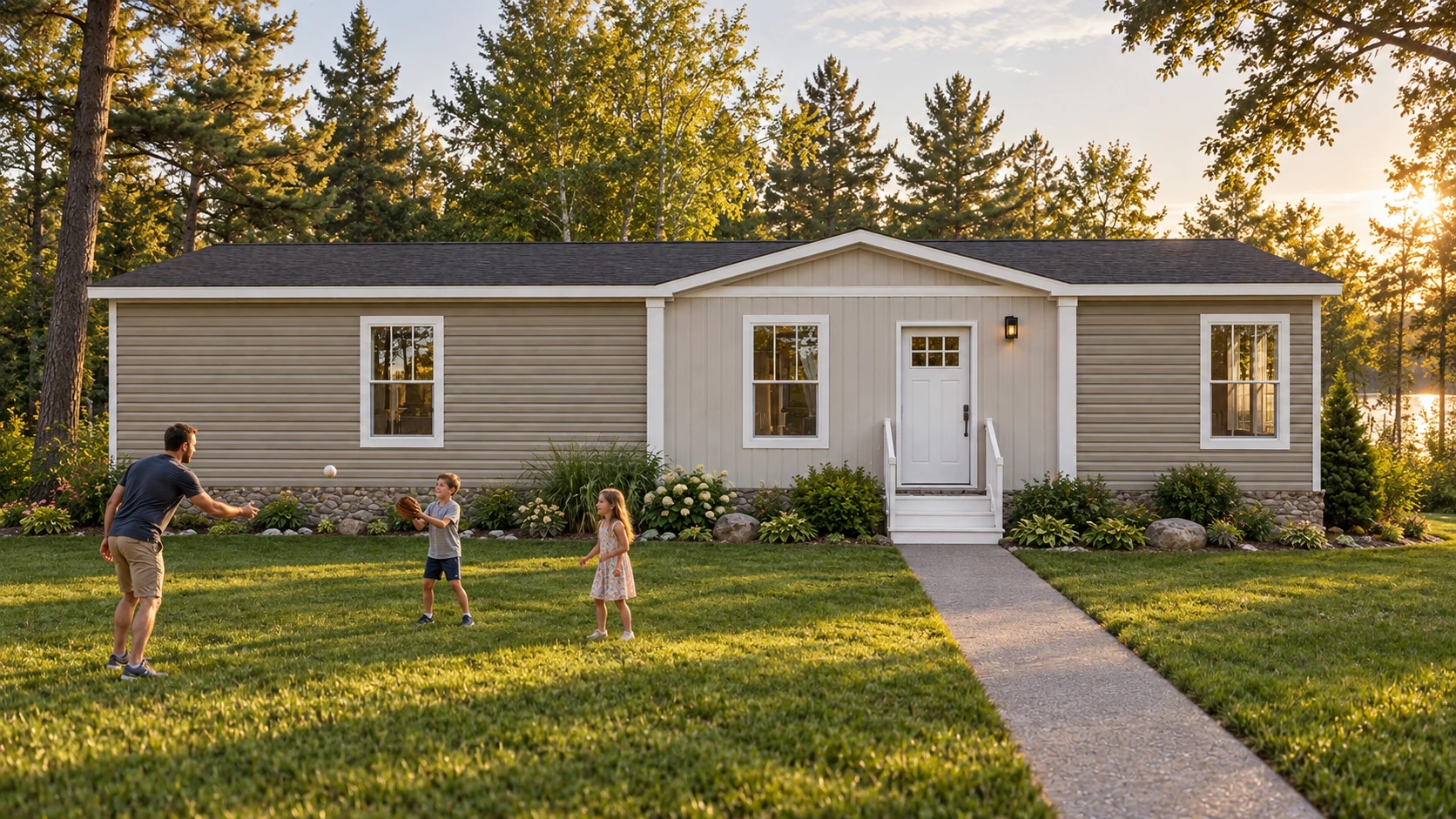
A healthy housing market needs movement. When an older owner can move into a smaller, lower-maintenance home, an existing larger home may become available to a family.
That kind of filtering is not automatic, but it illustrates why communities need a range of sizes, prices and ownership formats.
Compact one- and two-bedroom plans can be an important part of the local answer, especially when they are near services and designed for long-term usability.
What the numbers leave out
Many Northwoods residents want to remain near family, health care, friends and familiar services as they age. The obstacle is often not a desire to leave but the lack of an appropriate alternative. A large rural property may become difficult to maintain, while local apartments or smaller ownership homes may be unavailable.
Right-sizing is different from simply downsizing. The replacement home needs to support the resident’s current priorities: fewer maintenance demands, manageable utility costs, useful storage, space for visitors and access to everyday services. A plan that is smaller but poorly arranged may not be an improvement.
Single-level living can make a home usable for more years. Step-free entries, wider pathways, reachable controls, lever handles and a bathroom that can accommodate future mobility needs are easier to include during design than retrofit later. Not every home needs to meet an institutional standard to incorporate practical universal-design thinking.
Where this gets practical
When an older household moves voluntarily into a suitable smaller home, the prior property can return to the market. That may create an opportunity for a larger family without requiring the community to build every housing type at once. This movement is sometimes called filtering, though the outcome depends on price, condition and actual local demand.
Location is as important as the floor plan. A smaller home far from services may increase dependence on driving and family assistance. Sites near health care, groceries and community activity can support independence, while thoughtful snow removal and pedestrian design make the neighborhood more functional throughout the year.
Ownership remains important for many older residents who want stability and control over their home. Others may prefer rental or cooperative models. A healthy community should not force every household into one tenure type; it should provide choices that allow residents to match housing with finances and lifestyle.
The work in front of us
Compact plans can also serve first-time buyers, single professionals and small households, which makes age-friendly development economically broader than a narrowly defined senior project. A mixed-age neighborhood can support resale, social connection and long-term adaptability.